Confused flour beetle
Tribolium confusum
Coleoptera: Tenebrionidae
The genus Tribolium includes 32 described species. Tribolium confusum and T. castaneum are most serious pests on stored products.T. confusum is cosmopolitan and widespread, but particularly common in temperate climates.
Why is T. confusum difficult to control?
- reported resistance to organophosphate
- adults live up to two years and lay a max. of 700 eggs
Host plants and damage
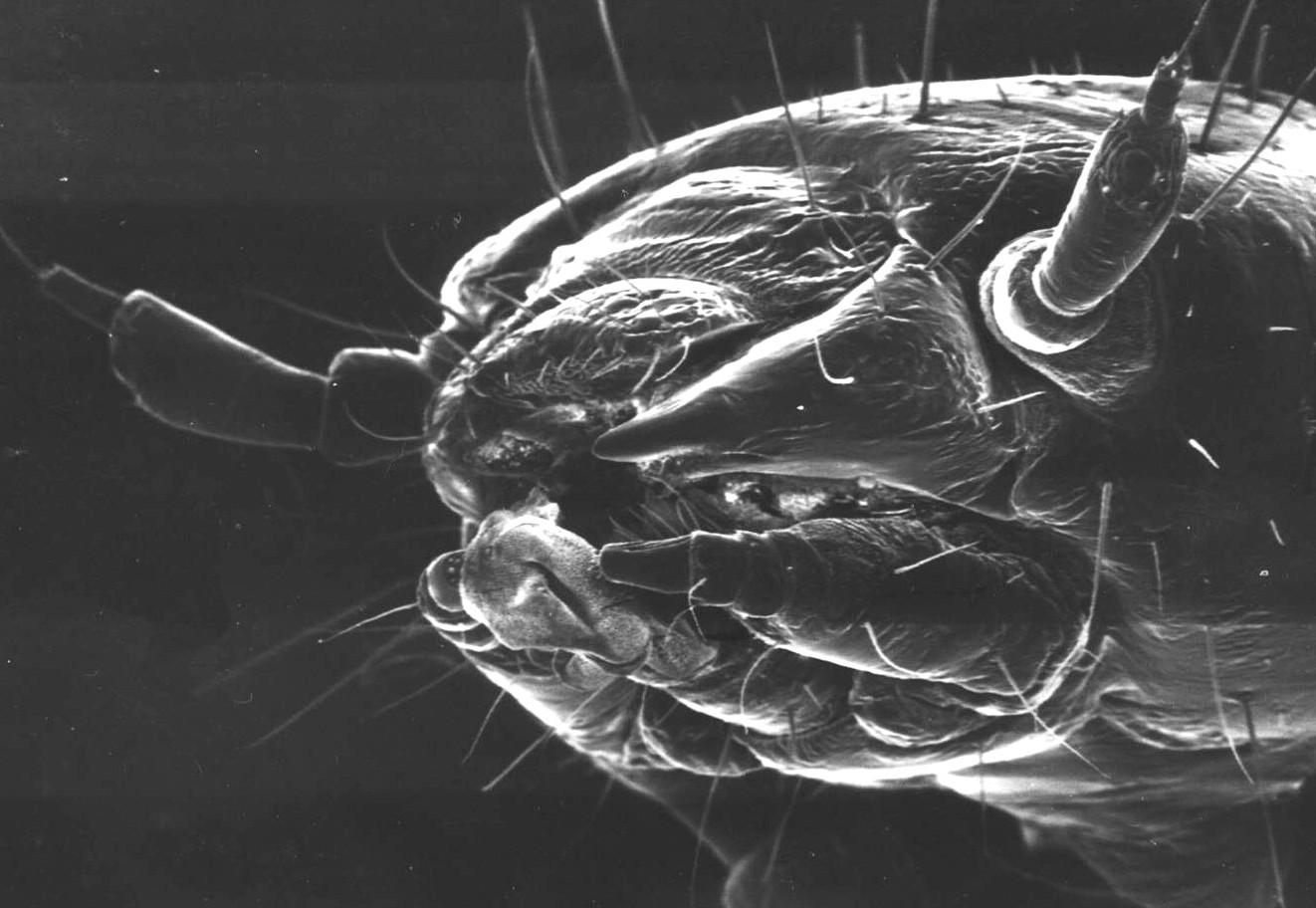
T. confusum is primary an important pest of stored products, especially cereals. Hosts are Triticum (wheats), Zea mays (maize), Sorghum vulgare (sorghum), Avena sativa (oats), Oryza sativa (rice) and Pennisetum glaucum (pearl millet). It may also feed on seeds of Phaseolus (beans) and Pisum sativum (pea) in the field.
Plant growth stages affected
Plants are affected during post harvest.
Affected plant parts
Infestations of T. confusum occur in seeds and seed products during post-harvest.
Damage
The symptoms are similar to damage by T. castaneum. At high levels of infestation, adults are present on product surfaces. Larvae ground up material only as they are unable to penetrate kernels. Infested products may change in color, become mouldy and smell musty. The bad odor (benzoquinones) is emitted by T. confusum and causes aggregation.
Morphology & biology
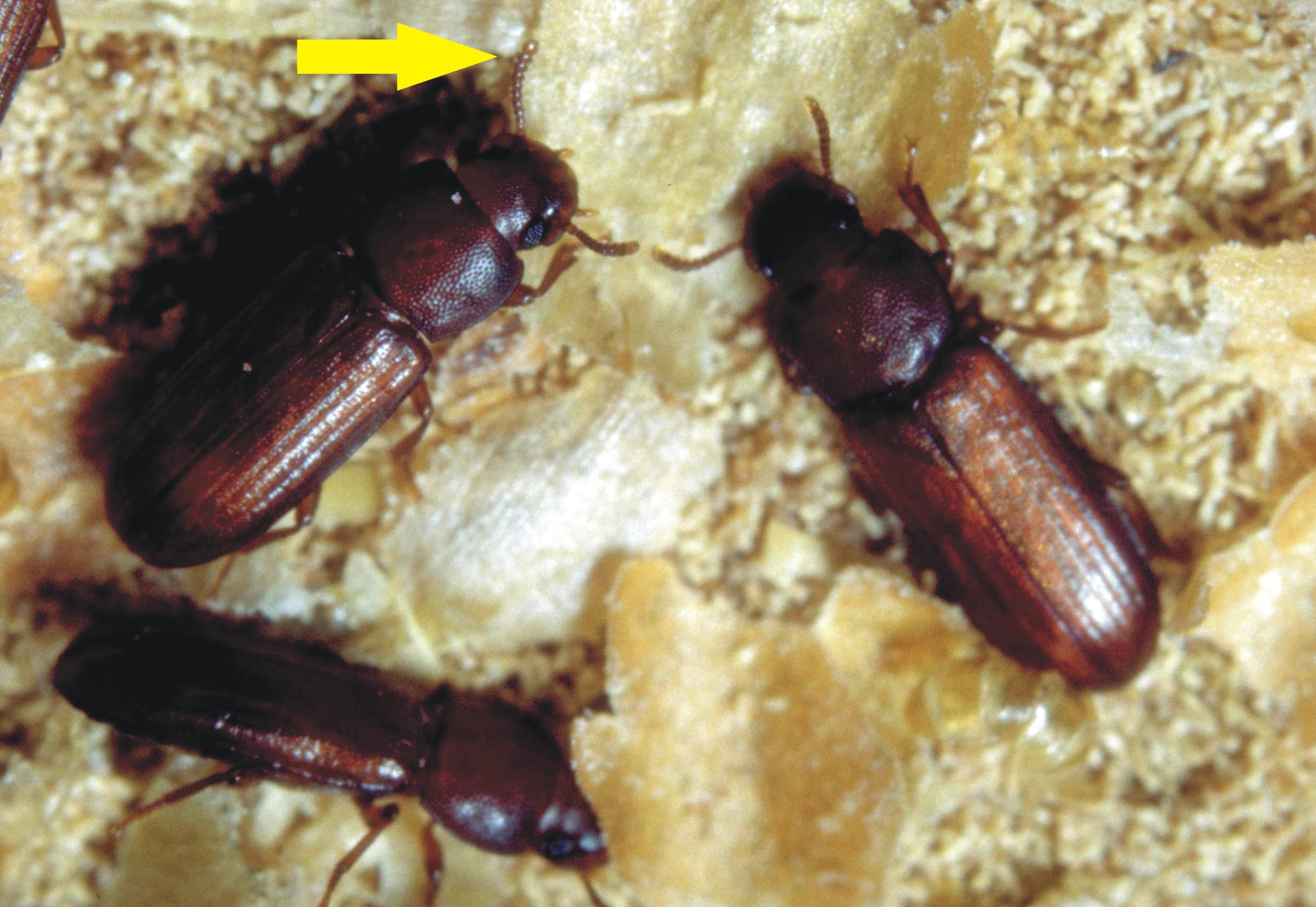
The brown and rather shiny adults are 2.6–4.4 mm long. The prosternal process is distinctly broader at the apex. Wings have ridges with punctures. Furthermore, the head and upper part of the thorax are covered with punctures. Antennae have a 5-segmented club.
Females produce a total of up to 700 yellow-white eggs over a period of a few months. Eggs can hatch under optimal conditions in 3–5 days.
Larvae have a dark head and are light-honey colored. They can pass more than five instars, depending on food source and environment.
Pupae (no cocoon) are initially light yellow, but become dark in time. Development from egg to adult can be completed under ideal conditions in 26 days. The optimum temperature for development is 32.5 °C. Minimum and maximum temperatures for development are 19°C and 37.5 °C, respectively. Adults live about 1 year, but they can survive for up to 5 years at low temperatures. Large larvae and adults show cannibalism and attack immobile stages.
The morphology of antenna is used to distinguish between the species T. confusum and T. castaneum. The antennae segments of T. confusum gradually increase in size from the head towards the last segment (second figure), whereas, the last three segments in T. castaneum are equal in size and larger than the other segments.
Monitoring
T. confusum can be monitored with pitfall, bait-bag (aggregation pheromone) and refuge traps. Stored products may be continuously monitored for infestations by beetles and larvae. A persistent and disagreeable odor in the commodity should be the last sign to signal that control is necessary.
Pest management
To prevent an infestation ensure, that sanitary practices are followed. T. confusum cannot fly, but T. castaneum may fly.
Surface tretament with diatomaceous earth, especially under hot dry conditions, can prevent infestation.
Nitrogen atmospheres in the absence of oxygen can be used to control infestations.
Chemical Control
Organophosphates, pyrethroids and fumigation with methyl bromide or phosphine are effective for control. Reportedly, T. confusum has developed resistance to organophosphates.
Recommendations for better management:
- follow sanitary practices