Epilachna beetles
Epilachna beetles
Coleoptera: Coccinellidae
There are many species of Epilachna, some of which are important pests. Color variation among and within species, has lead to confusion in correct identification. The only reliable taxonomic feature to separate species is the male genitalia.
Why are Epilachna beetles difficult to control?
- Adults are easily mistaken for beneficial ladybird beetles and therefore no insecticides are applied
Host plants and damage
Primary hosts are: Phaseolus (beans), Glycine max (soyabean), Vigna unguiculata (cowpea), Lycopersicon esculentum (tomato), Cucumis sativus (cucumber), and Solanum melongena (eggplant).
Plant growth stages affected
Vegetative growing stage, flowering stage, and fruiting stage
Damage
Adults and larvae feed on the undersides of leaves, scraping away the lower epidermal cells between the leaf veins to leave irregular shaped depressions or regular feeding strips. Heavy feeding damage will skeletonize the leaf.
Morphology & biology
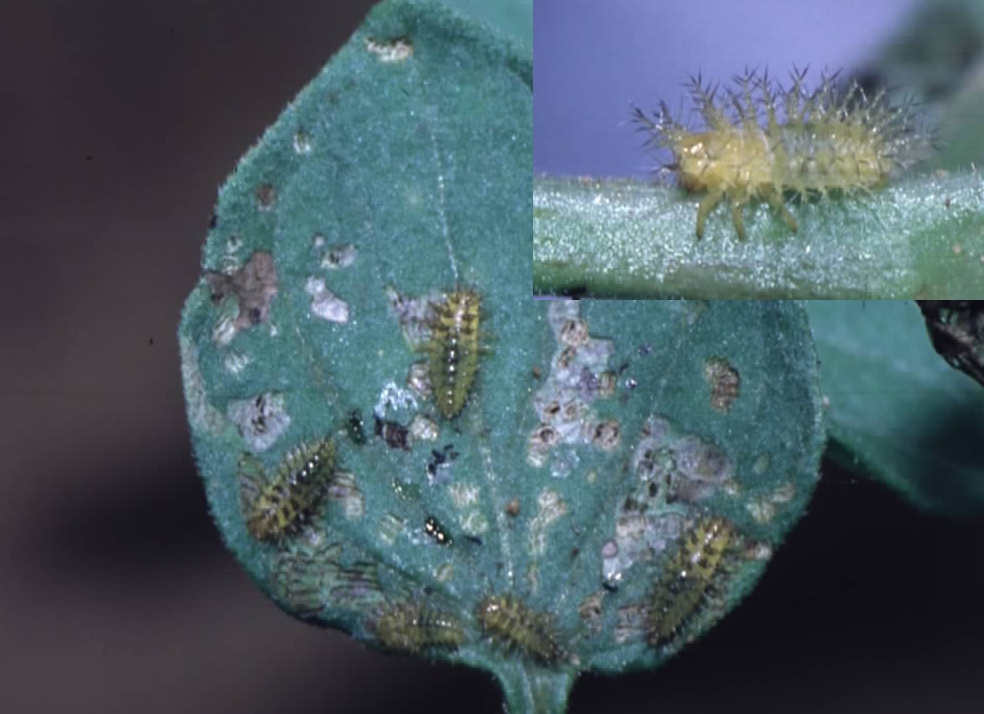
Eggs are deposited on the undersides of leaves in small batches. They are yellow or orange-colored and elliptical in shape. Depending on temperature, eggs take about 5-14 days to hatch.
There are four larval instars and larval development can be completed in 16-20 days, depending on temperature. Larvae are yellow in color, and covered with long spines. Their size ranges from 1.5 mm for newly hatched larvae up to 9 mm in full-grown, fourth instar larvae.
Pupation takes place on the leaf surface. Pupae are ovate in shape and similar in size to adults. They are yellow in color with brown markings.
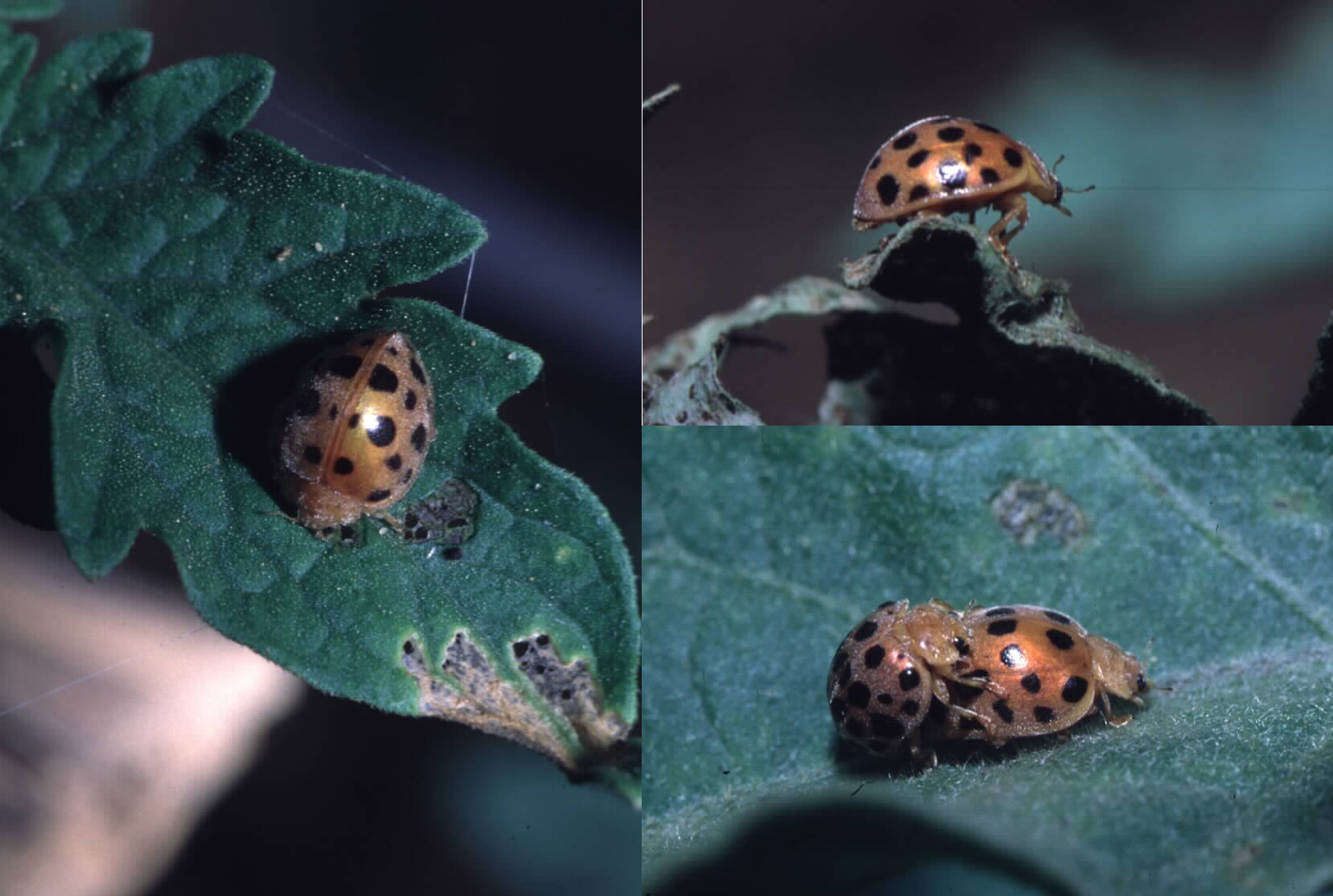
Adults are 6.5 – 8 mm long with a typical oval ladybird shape. Color is variable, but generally adults are brow with black spots on the elytra. Newly emerged adults are yellow in color. As the body hardens, characteristic dark spots develop. Elytra darken gradually with age becoming brown or copper in color.
Monitoring
Because larvae and adults feed externally, their presence can be readily detected by observing damage to leaves. Tapping the leaves will usually cause beetles but not larvae to fall to the ground. Look carefully on both sides of leaves.
Pest management
Biological control
In India various natural agents were sometimes able to control populations. However, in general, indigenous enemies are not effective.
Cultural control
Recent work with soybean genotypes showed differences in susceptibility to Epilachna beetles, but no variety was totally resistant.
Chemical Control
Insecticides are the principal means of control.