Pickleworm
Diaphania nitidalis ()
Lepidoptera: Pyralidae
Pickleworm is a tropical insect pest in North and South America. It is a highly disperse species invading many areas during the summer time.
Why is the pickleworm difficult to control?
- very difficult to detect, moths are not attracted to light traps and pheromone traps have limited success
- older larvae are hidden from direct contact with insecticides inside fruits
Host plants and damage
Host plants for the pickleworm are Brassicacea and Cucurbitacea, both wild and cultivated species. The pest shows preferences for Citrullus lanatus (watermelon), Cucumis melo (melon), Cucurbita moschata (pumpkin), and Momordica charantia (bitter gourd).
Pickleworm larvae feed on blossoms, leaves, and mine into fruits/pods. Unlike the melonworm (D. hyalinata), which is primarily a foliage feeder, the pickleworm also damages fruits. Young fruits are preferred before the rind has hardened. Young larvae feed mainly on leaves and blossoms.
Morphology & biology
Moths deposit eggs singly or in small clusters on the foliage, flowers, or buds. Egg production can be up to 400 eggs per female. Eggs are very small in size and less than 1 mm in length. After approximate 3-4 days first instars hatch.
Larvae are about 1.5 mm in length, colorless except for a black spot on each side of the head. There are five instars and total development averages at 20 °C two weeks. Color is variable and depends on the insect diet. Last instars can reach a maximal length of 3 cm.
Last instars spin a cocoon within rolled leaves. The initially white pupa turns reddish brown. They are about 16 mm in length and enclosed in a silken cocoon. Pupation lasts eight to nine days.
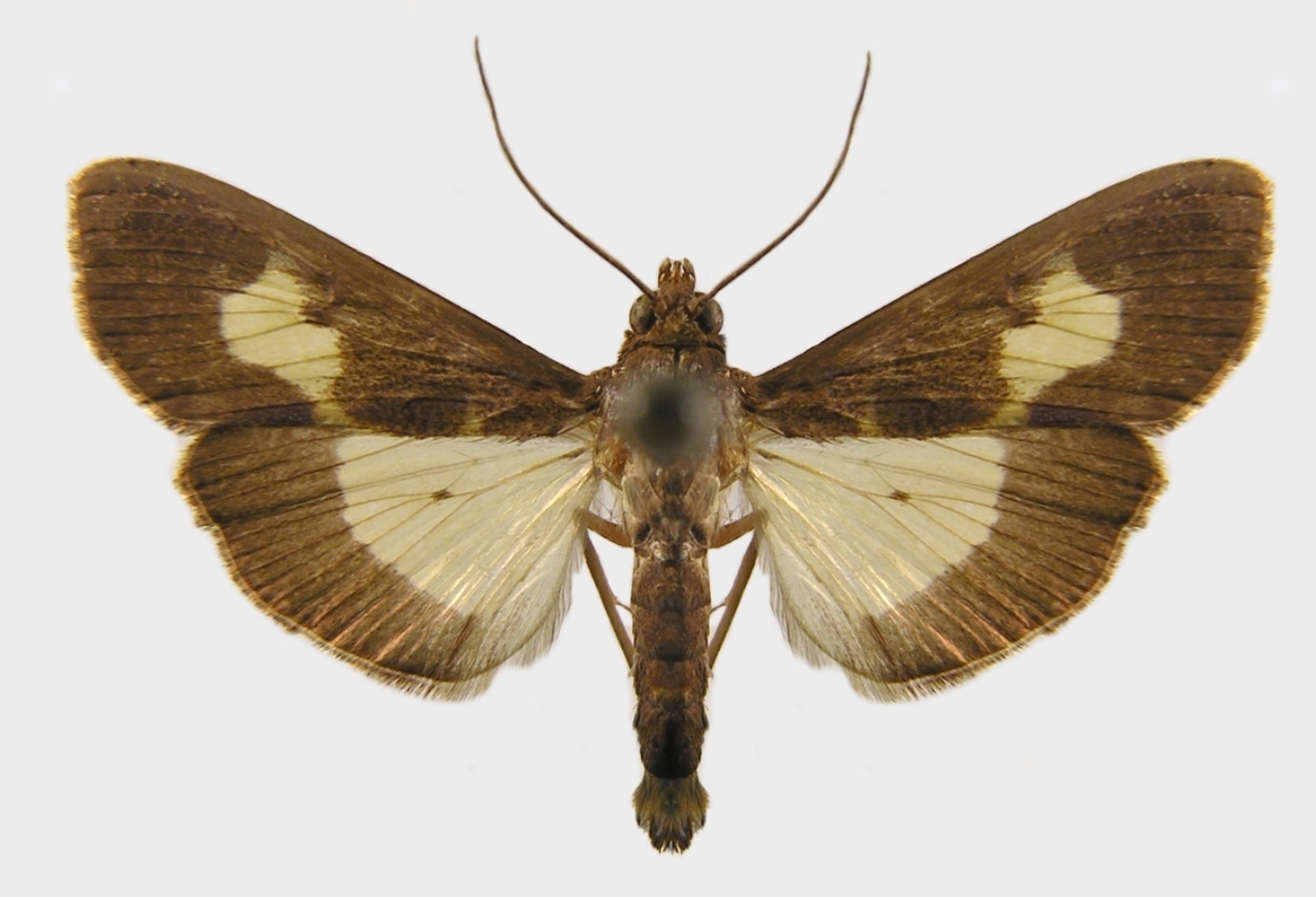
The adult pickleworm moth has a pale yellow spot near the center of each forewing. The ground color is dark brown; the hind wings are pale yellow. On the white-tipped abdomen are dark brush-like hairs present.
D. nitidalis can complete its life-cycle in about 30 days. Female moth produces a sex pheromone. Adults are not found in the field during daytime. Moths peak flight activity is three to five hours after sundown.
Monitoring
It is very difficult to scout for this insect. Light raps do not attract adults. Susceptible squash varieties can be used to trap and monitor adult populations.
Pest management
Biological control
Several Braconidae parasitoids are known attacking D. nitidalis, including Hypomicrogaster diaphaniae () and Pristomerus spinator ().
Bacillus thuringiensis is effective against pickleworm, but can not be recommended because the hidden feeding behavior of the larvae, protecting them from contact with the insecticide.
Cultural control
Field experiments in North Carolina have shown distinct differences in susceptibility of cucurbit varieties. Truly resistant cultivars are unknown.
Chemical Control
Several synthetic insecticides are effective against pickleworms. Apply insecticides when first signs of infestations are detected. Target young larvae because older larvae are often hidden in fruits.
Recommendations for better management:
- apply insecticides when first signs of infestations are detected, target young larvae because older larvae are often protected from contact in fruits