Cowpea aphid
Aphis craccivora
Sternorrhyncha: Aphididae
Cowpea aphid is present worldwide. It is particularly well distributed in the tropics, where it is one of the most common aphid species.
Why is A. craccivora difficult to control?
- it is a polyphagus insect
- it has a very short life-cycle and therefore a high reproduction rate
Host plants and damage
Cowpea aphid is polyphagous, but with a high preference for Leguminosae. It is found in small colonies on many other families, including Cruciferae.
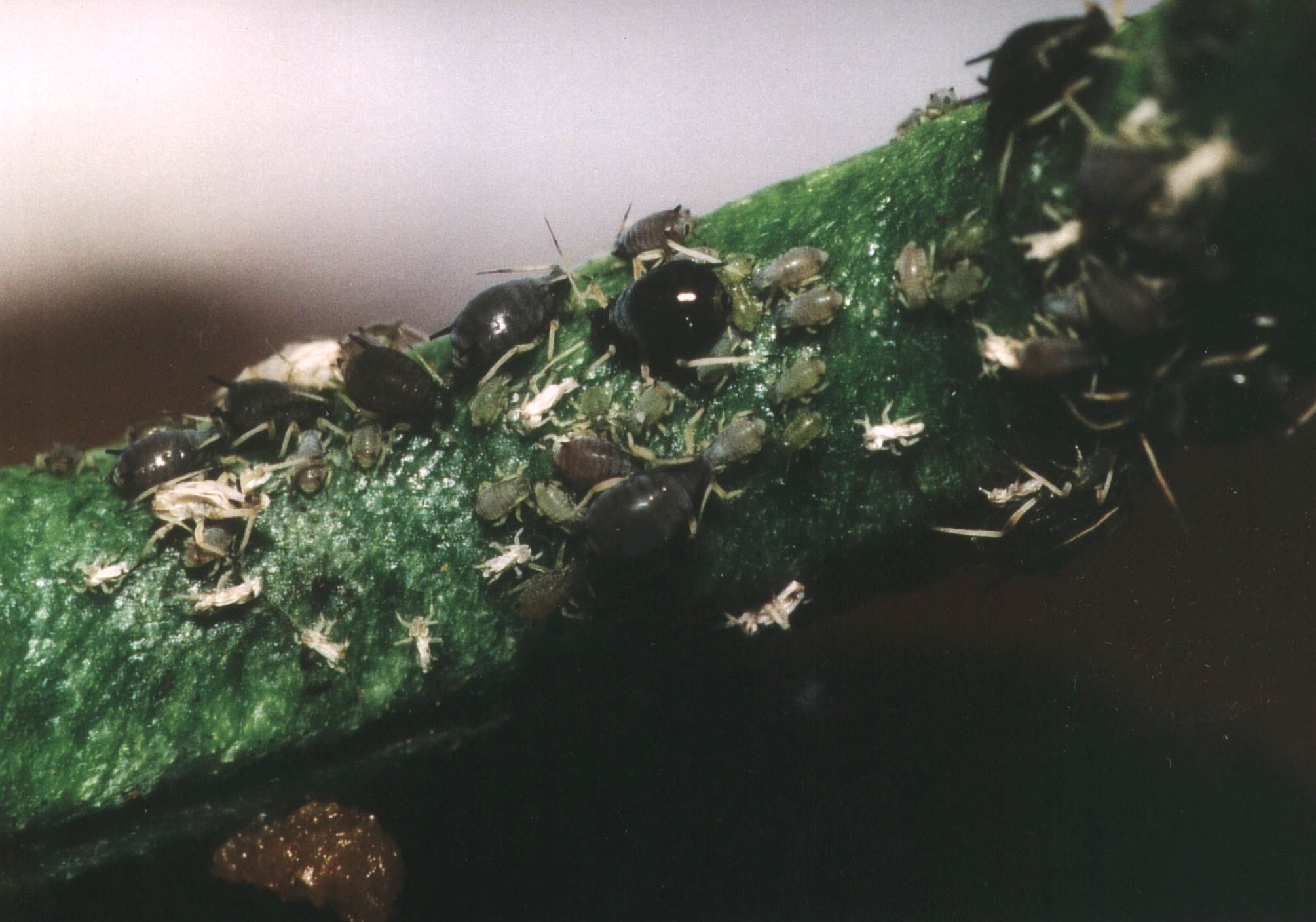
Primary hosts are Vigna unguiculata (cowpea), Cajanus cajan (pigeon pea), Medicago sativa (lucerne), and Vigna radiata (mung bean).
Young colonies of this small aphid concentrate on growing points of plants and are regularly tended by ants. Cowpea aphid feeds on shoots, leaves, inflorescences, stems, and fruits. They feed by plant juice sucking.
As a result of cowpea aphid feeding pod and seed production is very low. Plants become stunted and deformed when populations are high.
Cowpea aphids can vector viruses such as mosaic-virus. Those viruses can cause economoically important diseases.
Morphology & biology
In the tropics parthenogenetic reproduction is occurring throughout the year. The aphid is ovoviviparous, with females retaining eggs inside their bodies and giving birth to small larvae. Within a few days nymphs mature into adults and population density increases very rapidly. The durations of the total life cycle can be below 10 days at temperatures between 24°C and 29°C.
In areas with colder winters, overwintering is possible as egg or by hibernation.
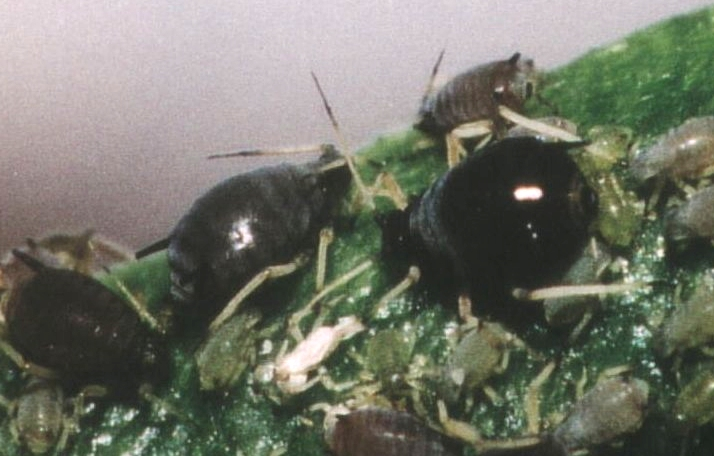
Adult females have a shiny black or dark brown body with and brown to yellow legs. The nymphs are greyish in color and sometime lightly powdered.
Monitoring
Leaves of seedlings should be examined for cowpea aphids. Inspect carefully areas were plants with yellowish tips are groing. Ants may indicate the presence of aphids.
Pest management
In the field, aphids do not survive periods of heavy rain.
Biological control
Few aphid natural enemies are host-specific. Important predators include coccinelidae beetles, syrphid fly larvae, lacewing larvae, and spiders. Often those beneficials occur only when aphid population is already high.
Important parasites of cowpea aphids are Trioxys indicus, Lysiphlebus fabarum and L. testaceipes. In India and Egypt parasitism rates of up to 10% are reported in cowpea and pigeonpea.
Cultural control
Cropping systems with host and non-host plants in combination with insecticides can minimize cowpea aphid incidence
Within corps remove virus infected plants to prevent further spread of the disease.
Chemical Control
Most major groups of insecticides have been used against this insect pest, including chlorinated hydrocarbons, organophosphates, carbamates and pyrethroids. The persistence of insecticides on the plants is an important factor for their effectiveness.
In some countries pest resistance to pyrethroid insecticides is described. Experimental work focused on botanical insecticides including neem gave some promising results.
Recommendations for better management:
- observe even seedlings for aphid infestations
- sanitary measures are important within crops; virus-infected plant material should be removed