Aphids
Sternorrhyncha
Aphids are small insect with a soft body. Aphids are worldwide distributed and there are many species of aphids feeding on all types of vegetation, including many vegetable crop families. Infestations generally result from a number of winged aphids colonizing suitable hosts
Why are aphids difficult to control?
- they are very small and difficult to find
- they have a very high reproduction rate
- they vector viruses
Host plants and damage
rimary host families are Cruciferae (cabbage, pak-choi, cauliflower, mustard, radish), Leguminosae (beans, peas), Solanaceae (eggplant, tomato, pepper), Cucurbitacea (cucumber, melon, pumpkin, sweet guard), and Umbelliferae (carrots).
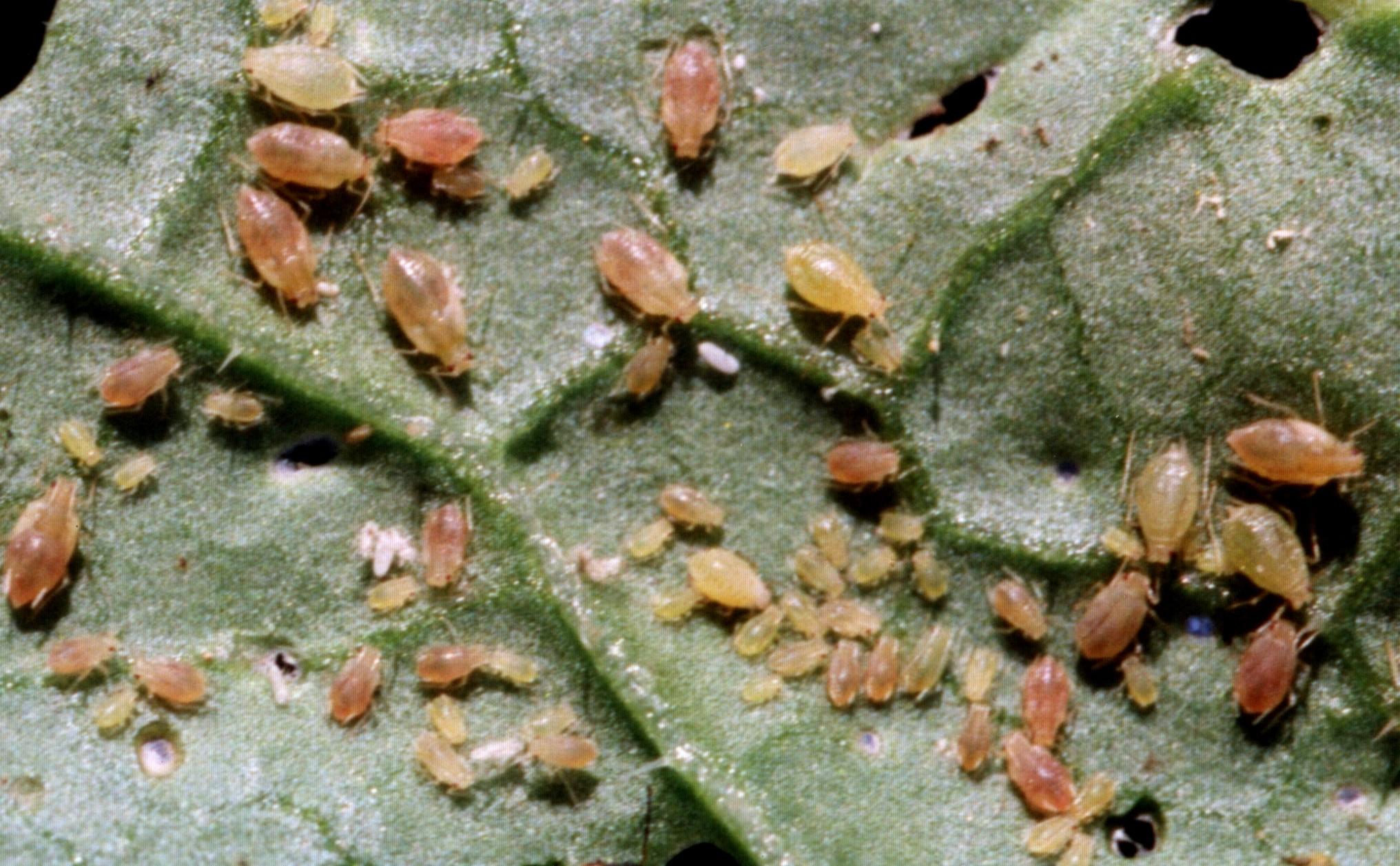
Most aphid species feed on stems or leaves, but some feed on roots.
Each plant reacts different to aphid feeding. Some show curled and wrinkled leaves. With severe infestations the leaves wilt and the plant can dies.
Aphids vector several plant viruses, including cabbage black ring spot, cabbage ring necrosis, cauliflower mosaic and radish mosaic.
Symptoms of viruses transmitted include mosaic, and necrotic lesions on leaves, premature leaf senescence, leaf stunting, rolling, and distortion.
In sugar beet, beet yellows virus causes yellowing in older leaves, and thickening of the leaves, which become leathery and brittle.
Morphology & biology
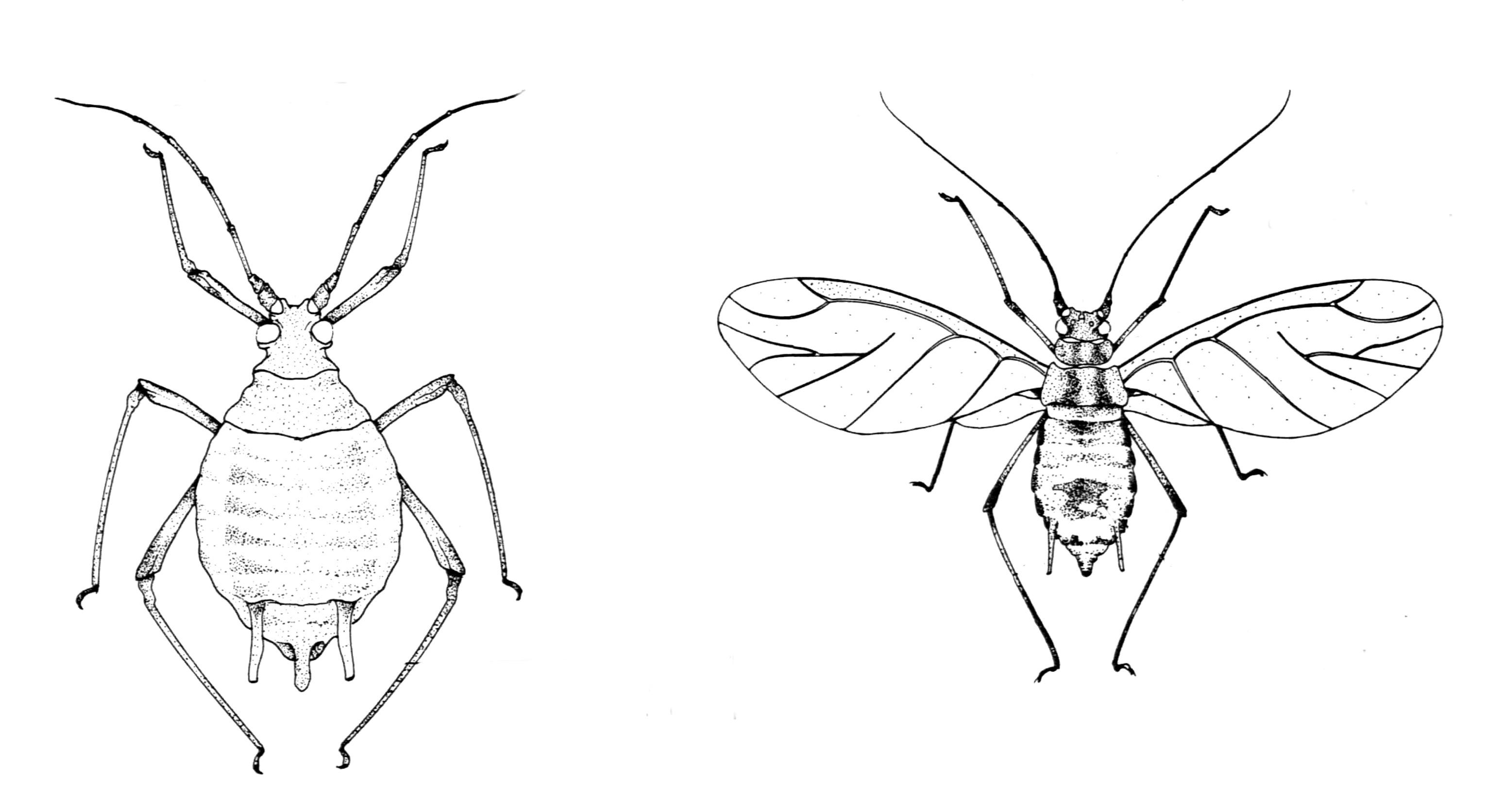
Insects vary in size from 2-4 mm. They are soft-bodied and pear shaped. Their color varies from yellow to green and black.
Reproduction can be either asexuell, sexuell, or both for some species. In warm regions parthogenetic reproduction can occur throughout the year.
Some aphid species produce a protective coat of white waxy filaments
Aphids can be identified by their sucking mouthparts, long antennae, thin legs, and a pair of tube-like structures (called cornicles) at the abdomen. They might be winged or wingless, often both forms in one colony.
Monitoring
Look on the undersides of leaves when they begin to curl or show signs of wilting. Look also for ants because aphid colonies are commonly visited by ants which feed on the honeydew secreted by the aphids.
Pest management
Early detection is the key element in reducing aphid infestations.
Biological control
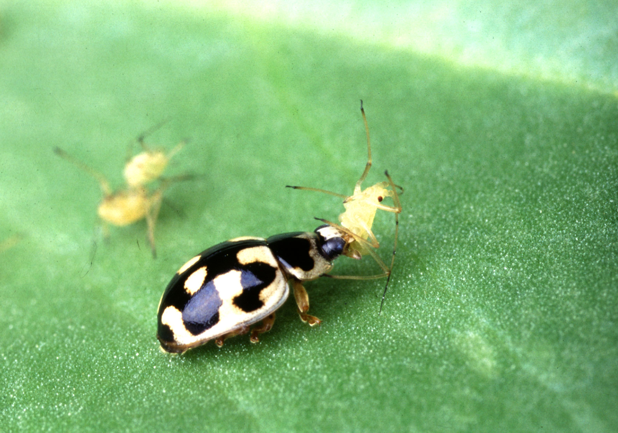
The parasitoid, Aphidius matricariae Haliday, has been used widely as a biological control agent against M. persicae in greenhouses
Cultural control
Among the cultural control methods recommended against aphids are weed management and the use of certified seeds known to be virus-free.
The practice of mulching has been reported to reduce aphid incidence.
Chemical Control
Control of some aphid species such as M. persicae with insecticides has had limited success. Resistance to a range of insecticides has developed worldwide. Other species are controlled by the application of organophosphates, carbamates and other pesticides. Neem was effective against M. persicae and other species. Systemic insecticides are generally more useful than contact insecticides. Aphids have sucking mouthparts and are susceptible to substances in the plant vascular system.
Horticultural oils and insecticidal soaps can be used to control aphids. They kill aphids by suffocating them and/or disrupting their membranes. Both, oils and soaps have to come in contact with the body.
Recommendations for better management:
- observe seedlings for aphid infestations
- sanitary measures are important within crops; virus-infected plants should be removed
- use only effective insecticides, if the insecticide you use is not effective, change to another which is from a different chemical group
- systemic insecticides are superior over contact insecticides for aphid control
- consider using horticultural oils or insecticidal soaps