Sweetpotato hawkmoth
Agrius convolvuli ()
Lepidoptera: Sphingidae
The sweetpotato hawkmoth is worldwide present in tropical and subtropical regions, except the Americas.
Why is the sweetpotato hawkmoth difficult to control?
- it is a polyphagous pest
- older larvae hide in the soil during daytime
Host plants and damage
Major host plants are nearly all species of Convolvulus. Economic important host plants are Ipomea batatas (sweet potato), Vigna radiata (mung bean), Vigna unguicultata (cowpea), and Helianthus annuus (sunflower).
The night active larvae are mainly nocturnal and prefer younger leaves of host plants. Leaves with holes are first sign of larval feeding. During major infestation whole plants can be defoliated.
Morphology & biology
Adult females lay their eggs singly on both sides of host plant leaves and on stems. Eggs are almost spherical and blue-green to yellow in color. Each female can oviposit up to 200 eggs.
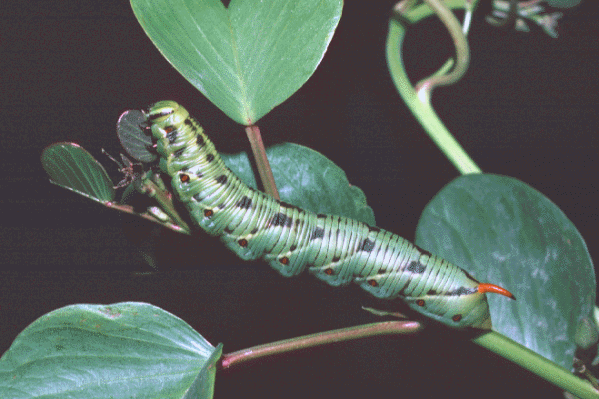
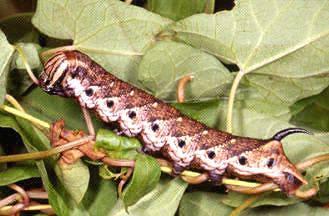
Larvae hatch after 8-14 days and start nibbling holes through the leaf. There are five instars. First instars are 3-4 mm in length. Larval color is variable but green is dominant. Fully grown larvae attain a length of up to 9 cm. They are hidden during daytime and feed during nighttime.
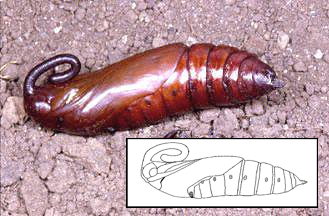
Pupation takes place in the soil beneath the host plant. Pupae are very mobile, 40-70 mm long and mahogany brown in color. They have a large distinctive “jug-handle” proboscis.
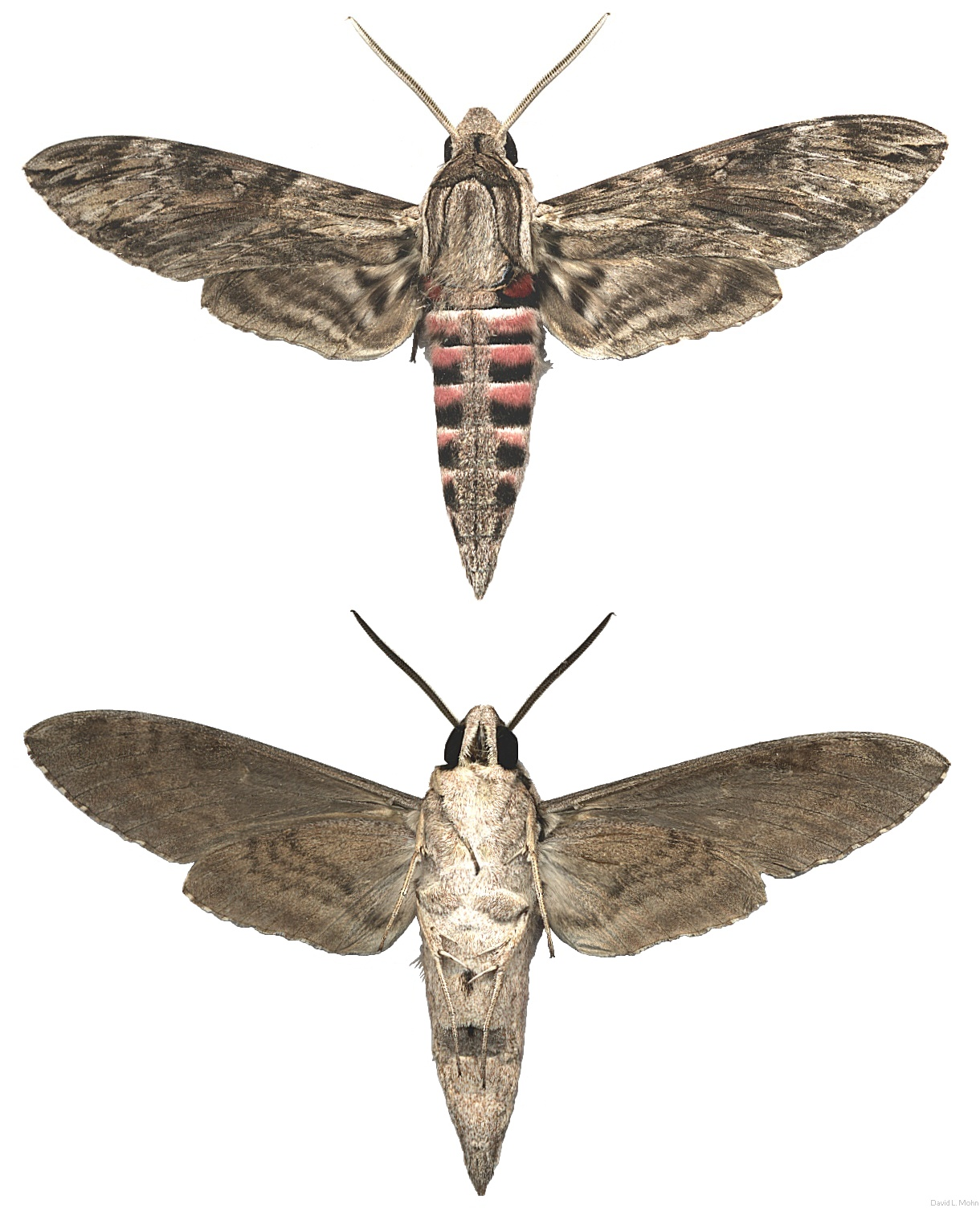
The adults are extremely good fliers. They rest during daytime with wings folded roof-like over the body. They resemble a piece of grey wood and are difficult to detect.
The wingspan is 80-130 mm, and females usually considerable larger than males. The ground color is light to dark grey with dark patches and markings.
The whole life-cycle takes 40-55 days, depending on temperature and quality of the diet.
Monitoring
First signs of infestation are numerous holes in young leaves. Older larvae defoliate plants and can be found on the ground near the host plant by day.
Pest management
Biological control
Trichogramma chilonis has been reported as very effective antagonist in Guam. Parasitism rates of eggs were between 70-100%.
Cultural control
Older larvae are easy to detect and can be collected by hand. Plowing the field in between crops reduces the sweetpotato hawmoth populations.
Chemical Control
Several synthetic insecticides in the groups of pyrethroids, organophosphorous, and carbamates have been reported to be effective against the sweetpotato hawkmoth.