Lepidoptera
(Butterflies, moth)
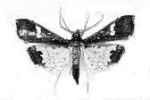
Agrius convolvuli – Sweetpotato hawkmoth
The night-active larvae prefer younger leaves to feed. Larval color is variable but green is dominant. Pupae are 40-70 mm long, mahagony brown in color and have distinctive “jug-handle” proboscis. Adults have a wingspan of 80-130 mm. Ground color is light to dark gray with dark patches and markings.

Larvae are covered with long hairs and 1st instars have 3, 2nd instars between 6 and 10 prolegs. Fully grown larvae are 40-50 in length. Adults have a wingspan of approx. 40 mm and brown fore wings with a clear circular spot in the middle.
Agrotis ipsilon – Black cutworm

Larvae hide during daytime in the soil. Young larvae feed on leaves, older larvae feed commonly on seedlings at ground level, sometimes cutting off the stem. When disturbed larvae curl up into a C-shape. They are dark brown or black in color. Adults are brown or gray with irregular spots and lighter hind wings.
Chrysodeixis eriosoma – Green semi looper

Young larvae feed on leave undersides making windows between the veins. Larval color varies depending from diet. They appear to have only 2 but have actually 3 prolegs. Adults have a bronze-white wings with two silvery white spots near the center of the forewings.
Crocidolomia pavonana – Cabbage caterpillar
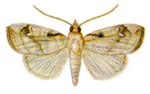
Young larvae feed on undersides of leaves, older larvae skeletonize complete leaves. Larvae are green-yellow in color, head and thorax are dark brown. Late instars are characterized by white longitudinal stripes. All abdominal segments have tubercles.
Diaphania hyalinata – Melonworm

Larvae have white stripes on the length of the body. Adult moths have black wing margins with lighter, pearly-white areas. Wingspan is about 25 mm.
Diaphania indica – Cucumber moth

The cucumber moth can be distinguished from the melonworm by the absence of an extension for the brown marking on the forewing. First instars are transparent but change to green. Fully grown larvae are up to 25 mm in length. Adult moth have transparent white wings with a brown band around the edge.
Diaphania nitidalis – Pickleworm

The Pickleworm feeds on foliage and on fruits. Larvae are often colorless except for a black spot on each side of the head. The adult moth has a pale yellow spot near the center of each forewing. On the white-tipped abdomen are dark brush-like hairs.
Etiella zinckenella – Limabean podborer

Larvae cover pods with a small web and bore into the pod. They feed on developing seeds. Blossoms drop as a result of feeding. Moth are brown-gray with a white stripe along the edge of the forewings. Wingspan measures 19-27 mm.
Helicoverpa armigera – Tomato fruitworm

1st and 2nd larvae are yellow-white in color with dark legs. Color is extremely variable in older larvae. Adults have a wingspan of 35-40 cm, and a length of 14-18 mm. Damage differs by host species. The tomato fruitworm is polyphagous and older larvae may bore into pods and consume seeds.
Hellula undalis – Cabbage webworm
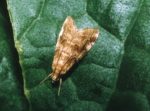
Larvae bore into the plant growing points, destroying the terminal bud. Larvae have dark heads, a creamy body with light pinkish-brown longitudinal stripes. Adults are gray brown with pale dusky hindwings. Each forewing has zigzagging brown lines.
Leucinoides orbonalis – Eggplant fruit and shoot borer

Affected are fruits, flowers and especially fruits. Larvae bore through flowers and fruits. First instars are creamy white, whereas later instars turn to a pinkish-brown color. Adults are brown with black dorsal spots. Wings are white with brown, black and orange markings.
Maruca vitrata – Bean podborer

Larvae feed in flowers and pods. Mature larvae can attain 17-20 mm in length. The head capsule is light to dark brown, and the body, whitish to pale green or pale brown with irregular dark spots. Adults have browinsh-black wings with clear, white markings. Wingspan is 20-25 mm.
Omiodes diemenalis – Soybean leaf folder

Larvae are about grayish green with yellowish heads. They feed on host plant leaves. Adults are light brown in color with yellow patches.
Omiodes indicata – Soybean webworm

Leaves webbed together and defoliation are typical signs of infection. The larvae are bright green and very active when disturbed. Adults are variable in color but usually red-brown with some lighter gray markings.
Pieris rapae – Imported cabbage worm

Young larvae are pale yellow and covered with fine hair. Later instars become green. Larvae silk the surface of host plant leaves and anchor their rear ends to it. The adults have white wings with black spots.
Plutella xylostella – Diamondback moth

Young larvae are pale yellow and covered with fine hair. Later instars become green. Larvae silk the surface of host plant leaves and anchor their rear ends to it. The adults have white wings with black spots.
Spodoptera exigua – Beet armyworm
Young larvae commonly feed on the under surface of leaves, leaving the upper epidermis and larger veins intact. They are light green to dark brown with longitudinal stripes. Adults are 10-15 mm long with a wingspan of 25 mm.

Young larvae are pale yellow and covered with fine hair. Later instars become green. Larvae silk the surface of host plant leaves and anchor their rear ends to it. The adults have white wings with black spots.
Trichoplusia ni – Cabbage looper
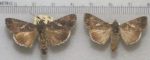
Young larvae are initially white, but become later pale green. They have a light stripe down each side. They grow 4 cm in length. The caterpillar moves with a characteristic “looping” motion. Adults are 25 mm long, gray-brown with a wingspan of 33 to 38 mm.