Search by affected crop [→ List of all pests on Fabaceae]

Insect pests on Fabaceae

PictureScientific nameCommon nameDescription
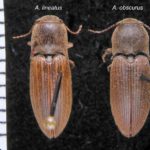
Adult wirewormsAgriotes lineatusWirewormLarvae are up to 20 mm in length and have a shiny pale yellow color. Adults are flattened, elongate, brown or black beetles and 7-8 mm in length.
Agrius convolvuliSweetpotato hawkmothThe night-active larvae prefer younger leaves to feed. Larval color is variable but green is dominant. Pupae are 40-70 mm long, mahagony brown in color and have distinctive "jug-handle" proboscis. Adults have a wingspan of 80-130 mm. Ground color is light to dark gray with dark patches and markings.
Agrotis ipsilonBlack cutwormLarvae hide during daytime in the soil. Young larvae feed on leaves, older larvae feed commonly on seedlings at ground level, sometimes cutting off the stem. When disturbed larvae curl up into a C-shape. They are dark brown or black in color. Adults are brown or gray with irregular spots and lighter hind wings.
Agrotis segetumTurnip mothLarvae are covered with long hairs and 1st instars have 3, 2nd instars between 6 and 10 prolegs. Fully grown larvae are 40-50 in length. Adults have a wingspan of approx. 40 mm and brown fore wings with a clear circular spot in the middle.
Amrasca devastansEggplant leafhopperAdults and nymphs suck plant sap from the under surfaces of leaves. Affected leaves show "hopper-burn" symptoms. Yellowing of leaves, curling of leave tips and sometimes drying of the leaves are symptoms of Eggplant leafhopper infestation.
-AphidsInsects vary in size from 2-4 mm. The color varies from green to black. Nymphs are without, adults with wings. They can vector several plant viruses. Leaves are curled and wrinkled, if infestation is severe plants may die.
Aphis craccivoraCowpea aphidCowpea aphids are tiny insects with shiny black to dark brown bodies and brown to yellow legs. Plants become stunted and deformed when populations are high. They can vector diseases. Aphids are often associated with ants.
Bemisia sp.White flyLarvae are tine (0.2-0.7 mm) scale-like insects. Adults are yellow/white. Feeding causes chlorotic spots on leaves.
Callosobruchus chinensisChinese bruchidThe Chinese bruchid is a major pest of stored legumes. Symptoms for early stages of infestation are the presence of eggs on pods. Adults are 2-4 mm long, the elytra are pale brown with dark marks.
Callosobruchus maculatusCowpea weevilLarvae of the Cowpea weevil infest seeds of legumes during fruiting stage and postharvest. Adults are pale brown in color and measure 2-4 mm in length. Females have two large dark patches on the elytra, males are less distinctive marked.
Chrysodeixis eriosomaGreen semi looperYoung larvae feed on leave undersides making windows between the veins. Larval color varies depending from diet. They appear to have only 2 but have actually 3 prolegs. Adults have a bronze-white wings with two silvery white spots near the center of the forewings.
Delia sp.MaggotsLarvae feed in host plant roots. They are creamy-white maggots. Fully grown larvae can be up to 10 mm in length.
Diaphania hyalinataMelonwormLarvae have white stripes on the length of the body. Adult moths have black wing margins with lighter, pearly-white areas. Wingspan is about 25 mm.
Diaphania indicaCucumber mothThe cucumber moth can be distinguished from the melonworm by the absence of an extension for the brown marking on the forewing. First instars are transparent but change to green. Fully grown larvae are up to 25 mm in length. Adult moth have transparent white wings with a brown band around the edge.
EpilachnabeetlesPests are scrapping the lower epidermal cells between the leaf veins away. Larvae are yellow in color, and covered with long spines. Adults are 6-8 mm long with typical oval ladybird shape. Color is variable, but generally adults are brown with black spots on the elytra.
Etiella zinckenellaLimabean podborerLarvae cover pods with a small web and bore into the pod. They feed on developing seeds. Blossoms drop as a result of feeding. Moth are brown-gray with a white stripe along the edge of the forewings. Wingspan measures 19-27 mm.
Helicoverpa armigeraTomato fruitworm1st and 2nd larvae are yellow-white in color with dark legs. Color is extremely variable in older larvae. Adults have a wingspan of 35-40 cm, and a length of 14-18 mm. Damage differs by host species. The tomato fruitworm is polyphagous and older larvae may bore into pods and consume seeds.
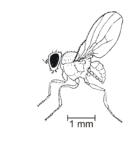
Liriomyza sp.LeafminerLeafminer are tiny insects which lay their eggs in leaves just below the surface. Larvae mine leaves and destroy photosynthetic area. Adults are small black and yellow flies, which may be detected flying closely around host plants.
Maruca vitrataBean podborerLarvae feed in flowers and pods. Mature larvae can attain 17-20 mm in length. The head capsule is light to dark brown, and the body, whitish to pale green or pale brown with irregular dark spots. Adults have browinsh-black wings with clear, white markings. Wingspan is 20-25 mm.
-MealybugsScale insects, have often a symbiotic relationship with ants. Adults have glossy white wax threads extend from the body.
Nezara viridulaGreen stink bugSpecies vary in color, but green is predominat. The first 3 instars form clusters. Adults are 8 x 15 mm in size. Feeding punctures provide access for infection by bacteria and fungus.
Omiodes diemenalisSoybean leaf folderLarvae are about grayish green with yellowish heads. They feed on host plant leaves. Adults are light brown in color with yellow patches.
Omiodes indicataSoybean webwormLeaves webbed together and defoliation are typical signs of infection. The larvae are bright green and very active when disturbed. Adults are variable in color but usually red-brown with some lighter gray markings.
Ophiomyia phaseoliBean flyMaggots mine the leaf and bore into the stem. Adults are tiny flies with transparent wings.
Riptorus linearisBean pod sucking bugAdults are 13-15 mm in length and have laterally a yellow band from head to abdomen. Adults prefer to colonize larger, more mature plants. Pods and seeds attacked show spots of discoloration.
- no photo available -Spodoptera exiguaBeet armywormYoung larvae commonly feed on the under surface of leaves, leaving the upper epidermis and larger veins intact. They are light green to dark brown with longitudinal stripes. Adults are 10-15 mm long with a wingspan of 25 mm.
Spodoptera lituraArmywormEggs are laid in clusters of several hundred. Larvae are hairless and variable in color. They have longitudinal bands and two dark spots laterally on each segment.
Thrips palmiMelon thripsAdults have slender wings, which are fringed with long hairs. They are pale yellow in color. Leaves turn silvery or bronze, sometimes yellow by feeding.
Tribolium castaneumRed flour beetleLarvae develop on undamaged grain and attack mainly dried stored products. The reddish-brown beetles are 2-4 mm long, flat and have an oblong shape. Head an upper thorax are covered with punctures.
Tribolium confusumConfused flour beetleThe symptoms are similar to damage by the Red flour beetle. Infested products become mouldy and smell musty. Adults are brown and rather shiny, they are 2-5 mm long. Wings have ridges with punctures.
Trichoplusia niCabbage looperYoung larvae are initially white, but become later pale green. They have a light stripe down each side. They grow 4 cm in length. The caterpillar moves with a characteristic "looping" motion. Adults are 25 mm long, gray-brown with a wingspan of 33 to 38 mm.
PictureScientific nameCommon nameDescription